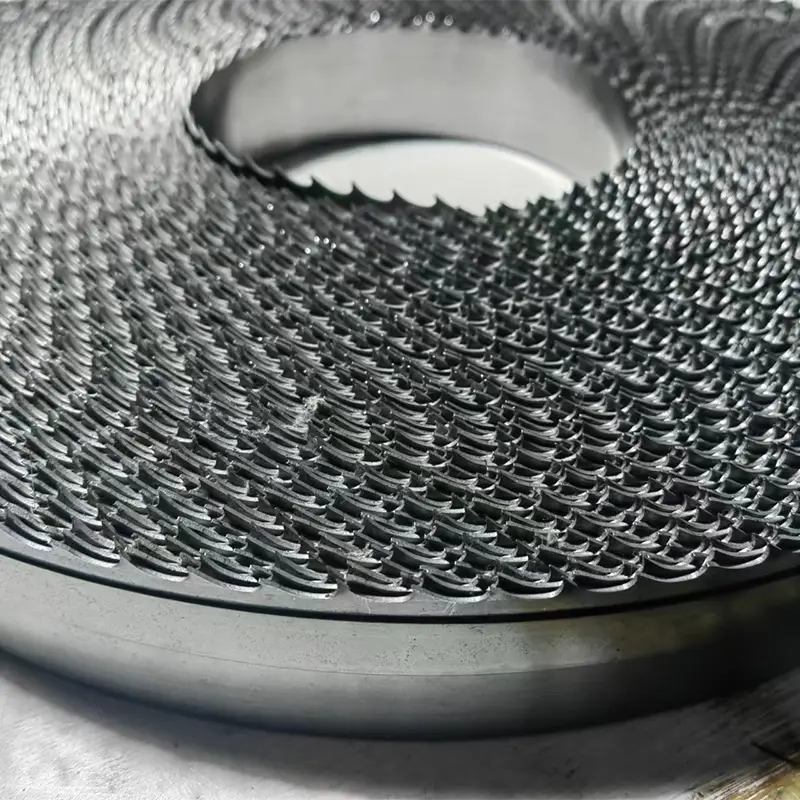
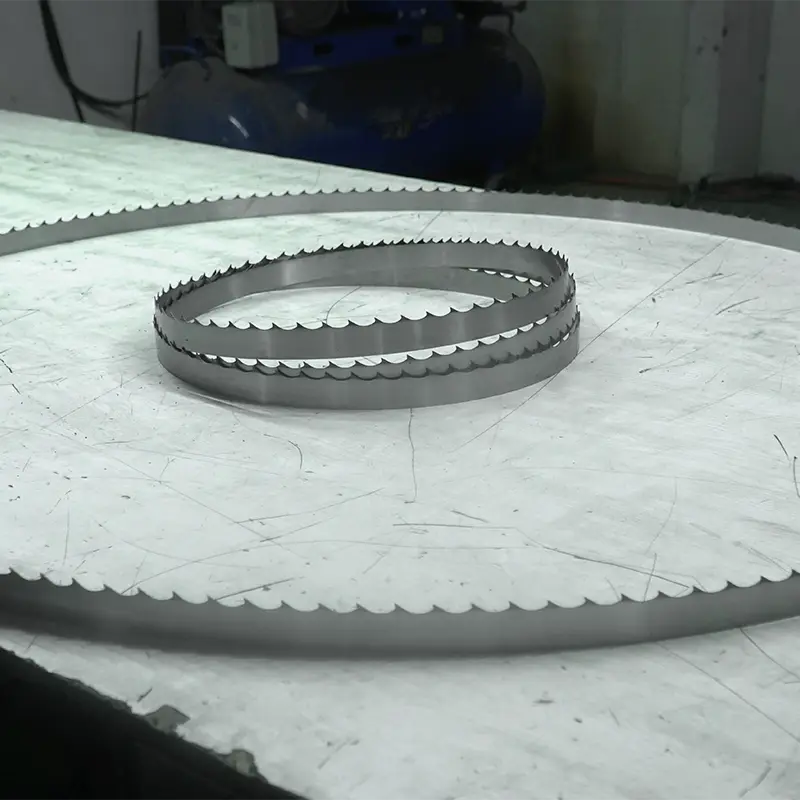
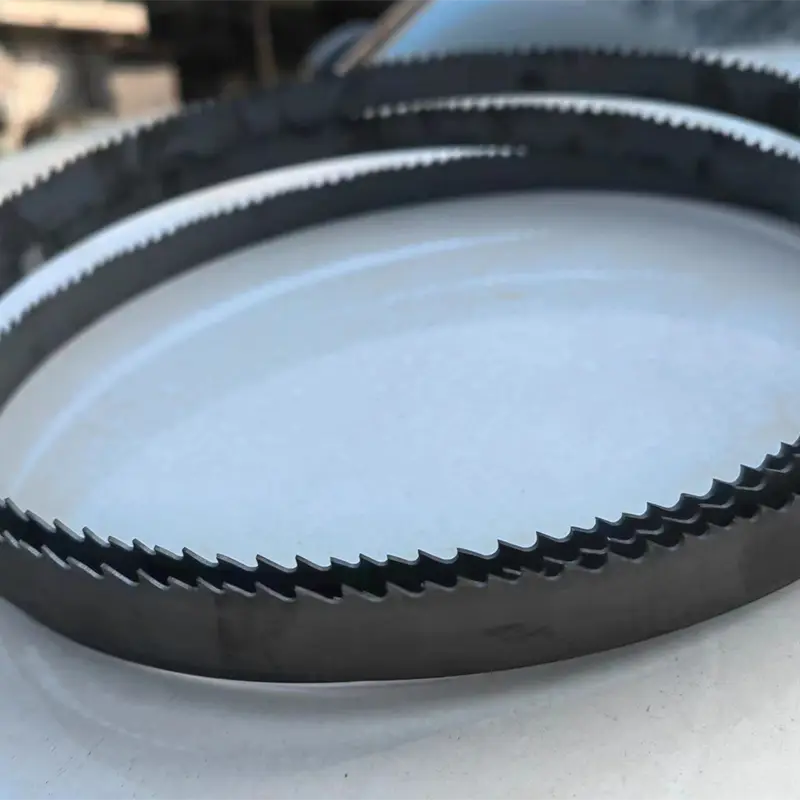
Product Overview
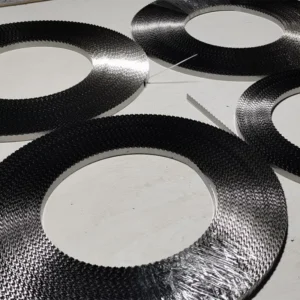
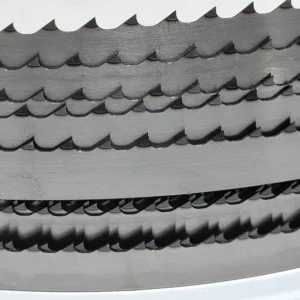
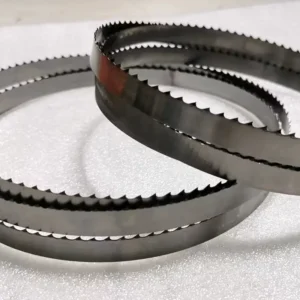
What this product is: A family of high-carbon steel saw blades designed for cutting metal, wood, plastics, and composite materials. The steel grade determines how long the blade stays sharp, how clean the cut is, and which materials it can handle safely.
Why steel grade matters: High-carbon steel with 0.60–1.25% carbon delivers the hardness and wear resistance that low-carbon steels cannot match. The three grades offered here — C67, SK5, and SK4 — form a deliberate performance spectrum from maximum toughness (C67) to maximum hardness and edge retention (SK4).
This lets users match the blade to the job instead of compromising with a generic “high-carbon steel” blade.
Material Comparison: C67 vs SK5 vs SK4
| Property | C67 (C67S) | SK5 (SK85) | SK4 (SK95) |
|---|---|---|---|
| Carbon content | 0.65–0.72% | 0.80–0.90% | 0.90–1.00% |
| Standard | EN 10132-4 (European) | JIS G4401 (Japanese) | JIS G4401 (Japanese) |
| Hardness after quench + temper | 50–52 HRC | 60–63 HRC at teeth | 61–62 HRC |
| Annealed hardness | ≤200 HB | ≤207 HB | ≤197–207 HB |
| Toughness | Highest | Good | Medium |
| Wear resistance | Medium | High | Highest |
| Edge retention | Good | Excellent | Excellent |
| Cutting character | Fast, impact-resistant | Balanced, general-purpose | Precise, long-lasting |
| Best applications | Thick stock, profiles, tubing | Hand hacksaw blades, general metal cutting | Scroll saw blades, fine cutting, thin stock |
| Relative cost | Economical | Moderate | Moderate to high |
Selection Guidance by Material
C67 is the toughness leader. Its lower carbon content absorbs shock without chipping, making it ideal for interrupted cuts, thick-wall tubing, and profiles where a brittle edge would fail. C67S strips are widely specified in band saw and cutting tool applications alongside SK5.
SK5 is the performance sweet spot. With 0.80–0.90% carbon, it hardens to 60–63 HRC at the teeth while retaining enough flexibility in the blade body for safe hand-tool use. SK5 is a standard material for professional hacksaw blades. The blade body is typically tempered to approximately HRC50 for durability, while the teeth are hardened to HRC60 for wear resistance — an optimal balance of toughness and cutting life.
SK4 delivers maximum hardness and edge retention. Japanese Industrial Standard SK95 (SK4) reaches 61 HRC after quenching and tempering, and can achieve ≥62 HRC after water quenching at 760–780°C. This makes it the preferred choice for scroll saw blades where precision and burr-free finishes matter more than speed. SK4 is classified as a versatile carbon tool steel suitable for cutter blades, band saws, and precision cutting tools.
TPI Selection Guide
Choosing the right teeth-per-inch (TPI) is the second critical decision after steel grade.
Rule of thumb: At least 3 teeth should be in contact with the workpiece at all times.
| TPI | Workpiece thickness | Typical materials | Recommended use |
|---|---|---|---|
| 14 TPI | 8–25 mm | Hard steel, small profiles | General machine shop cutting |
| 18 TPI | ≤13 mm | Tubing, thin-wall profiles, light angle iron | General hand sawing |
| 24 TPI | ≤6 mm | Thin tube, small rod, sheet metal | Fine metalworking |
| 32 TPI | ≤3 mm | Thin sheet, small-section tubing | Precision work, burr-free finish |
Key principle: Use coarser pitches (lower TPI) for faster cutting of thick sections. Use finer pitches (higher TPI) for smoother surface finishes and thin-walled materials. For soft materials such as aluminum or copper, higher TPI (32+) helps prevent teeth from catching and deforming the workpiece. For thick steel bar stock, 14 TPI clears chips efficiently without clogging.
Scroll Saw Blade Specifications
Scroll saw blades are available in two mounting types:
-
Plain-end (pinless): 5″ (127 mm) blades clamped directly into blade holders. Offers the widest selection of blade styles and sizes and requires a smaller entry hole for interior cuts.
-
Pin-end: Blades with small cross-pins that slot into holders. Easier to fit and tension, but limited to thicker blade profiles and fewer size options.
SK4 Scroll Saw Blade — Typical Specs
| Parameter | Specification |
|---|---|
| Overall length | 150 mm (≈5.9″) |
| Thickness | 0.56 mm |
| Width | 1.8 mm |
| Teeth | 52 TPI |
| Material | SK4 carbon tool steel |
| Cutting capacity | Iron / aluminum / brass ≤3 mm; wood ≤30 mm; plastic ≤20 mm |
This configuration is designed for metalworking, woodworking, and plastic cutting in a single blade. SK4 provides the hardness needed for clean, controlled cuts through thin metal sheets without deformation.
Key Features
-
Three-grade material system: Match blade to application — no more compromising with generic “high-carbon steel” descriptions.
-
High-frequency hardened teeth: SK5 teeth reach 60–63 HRC through induction hardening, maintaining sharpness far longer than standard carbon steel blades.
-
Flexible blade body: SK5 blade body tempered to approximately HRC50 provides the flexibility needed for hand-tool use without snapping, while teeth remain hard and sharp.
-
Precision-ground teeth: Triple-ground 3PT tooth geometry on SK5 blades delivers ultra-sharp cutting edges for fine finishes.
-
Anti-rust treated: Blades receive surface treatment to resist corrosion during storage and intermittent use.
-
Wide compatibility: Available in 6″ and 12″ hacksaw formats and 5″ scroll saw formats with both plain-end and pin-end mounting.
Applications
-
Metal fabrication and structural cutting
-
Plumbing and electrical conduit work
-
Automotive and machinery maintenance
-
DIY workshop and home projects
-
Scroll saw craftwork, model making, and precision cutting
-
Cutting aluminum, brass, copper, thin steel, wood, and plastics
Buying Information
-
Price: Request a quote for current pricing. Volume discounts available.
-
Packaging: Retail packs, bulk packs, and OEM/private-label packaging available.
-
Customization: Custom lengths, TPI, tooth geometry, and blade finishes available on request.
-
MOQ and lead time: Contact sales for minimum order quantities and production schedules.
-
Samples: Sample orders available for qualified buyers.
Frequently Asked Questions
Q: What is the difference between C67, SK5, and SK4 saw blades?
A: C67 has the lowest carbon content (0.65–0.72%) and the highest toughness — best for impact-heavy cutting of thick materials. SK5 (0.80–0.90% C) balances hardness and flexibility, making it the standard for professional hacksaw blades. SK4 (0.90–1.00% C) achieves the highest hardness (61–62 HRC) for precision scroll saw work.
Q: Which blade should I use for cutting stainless steel?
A: For stainless steel sheet and thin-walled tube, use a 32 TPI blade in SK5 or SK4. For thicker stainless sections over 5 mm, a 24 TPI SK4 blade provides the edge retention needed. C67 is not recommended for stainless steel due to its lower hot hardness.
Q: Can I use a hacksaw blade in a powered saw?
A: Hand hacksaw blades are designed for manual use. Powered hacksaws and band saws require blades with specific length, width, and thickness specifications. C67 and SK5 are both used in powered band saw applications, but blade dimensions and mounting must match the machine.
Q: How do I know when to replace a saw blade?
A: Replace when cutting speed drops noticeably, the blade wanders from the cut line, or visible tooth wear or flattening appears. SK5 and SK4 blades maintain sharpness longer than C67 under the same conditions, but all carbon steel blades eventually dull and should be replaced rather than forced.
Q: Are these blades suitable for cutting wood?
A: SK5 hacksaw blades with coarse TPI (11–14) can cut wood, and SK4 scroll saw blades handle wood up to 30 mm. For dedicated woodworking, bi-metal or carbide-tipped blades offer longer life. These carbon steel blades excel in metal-cutting applications where their hardness provides the greatest advantage.
Q: What does TPI mean and how does it affect my cut?
A: TPI means teeth per inch. Higher TPI means finer teeth, a smoother cut, slower speed, and better performance in thin or hard materials. Lower TPI means coarser teeth, a faster cut, a rougher finish, and better performance in thick or soft materials. Always ensure at least 3 teeth contact the workpiece to prevent tooth stripping.