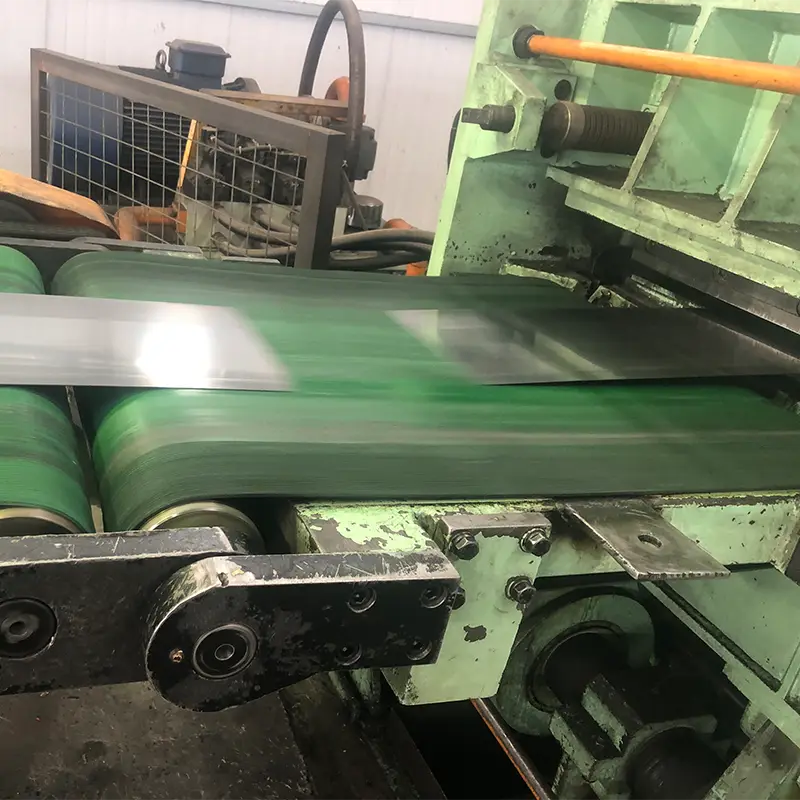
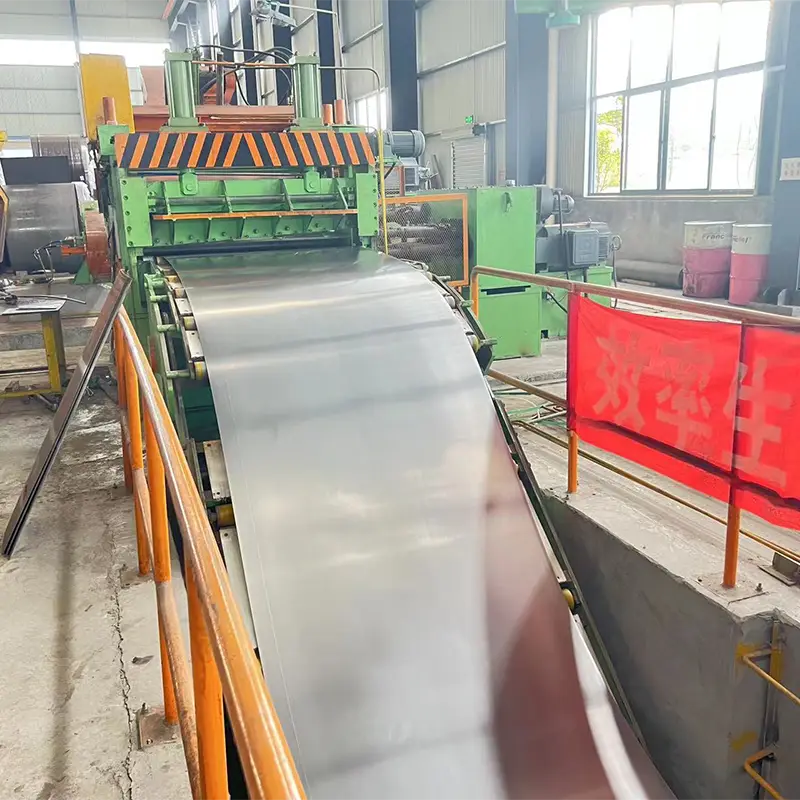
1. Product Positioning: What Problem It Solves
In saw blades, springs, and precision cutting, material failure usually stems from three conflicts: balancing hardness and toughness, insufficient fatigue life, and uncontrolled heat-treatment distortion. The key to selecting high-strength alloy steel strip is finding a grade that simultaneously meets high wear resistance and fatigue resistance, with a predictable heat-treatment window.
This product matrix uses four industrially proven grades to cover the following selection scenarios:
| Selection Priority | Recommended Grade | Core Rationale |
|---|---|---|
| Maximum wear resistance + saw tooth hardness | C75Cr1 | High carbon + chromium; quenched hardness up to HRC 58–64 |
| High impact load + fatigue crack resistance | 75Ni8 | Nickel-strengthened matrix; tensile strength ≥1,900 MPa, yield strength ≥1,700 MPa |
| Spring elasticity + hardenability balance | 51CrV4 | Chromium-vanadium synergy; high tempering stability, excellent yield ratio |
| General springs/structural parts + processing economy | 6150 | AISI chromium-vanadium spring steel; better weldability and formability than high-carbon grades |
2. Technical Comparison of Four Grades
Typical values are shown below. Actual delivery is subject to the batch Certificate of Analysis (COA).
2.1 Chemical Composition (wt %)
| Element | C75Cr1 | 75Ni8 | 51CrV4 | 6150 |
|---|---|---|---|---|
| C | 0.70–0.80 | 0.72–0.78 | 0.47–0.55 | 0.48–0.53 |
| Si | 0.15–0.35 | 0.15–0.30 | 0.22–0.35 | 0.15–0.30 |
| Mn | 0.60–0.90 | 0.30–0.50 | 0.95–1.05 | 0.70–0.90 |
| Cr | 0.40–0.60 | 0.05–0.25 | 1.00–1.10 | 0.80–1.10 |
| Ni | — | 1.80–2.10 | ≤0.15 | — |
| V | — | — | 0.12–0.15 | ≥0.15 |
| P (max) | 0.030 | 0.025 | 0.016 | 0.035 |
| S (max) | 0.030 | 0.010 | 0.005 | 0.040 |
Data sources: C75Cr1 according to DIN 17350-1980; 75Ni8 according to thyssenkrupp precidur® product specifications; 51CrV4 according to cold-rolled wide strip patent composition; 6150 according to AISI/SAE standard composition.
Selection note: The nickel content of 75Ni8 (1.8–2.1%) is the key difference from the other three grades. Nickel significantly improves matrix toughness, making it less prone to brittle fracture under high loads. The vanadium content of 51CrV4 (0.12–0.15%) refines grains and reduces overheating sensitivity.
2.2 Mechanical Properties (Typical Heat-Treated Values)
| Property | C75Cr1 | 75Ni8 | 51CrV4 | 6150 |
|---|---|---|---|---|
| Annealed tensile strength Rm | — | ≤700 MPa | 510–680 MPa | 667 MPa (annealed) |
| Rm after quench + temper | ≥1,300 MPa | 800–1,900 MPa | 1,350–1,650 MPa | ≥1,274 MPa |
| Hardness after quench + temper | HRC 58–64 | HRC 58–62 | HRC 44–52 | HRC 44–50 |
| Annealed hardness | ≤200 HB | ≤248 HB | HRB 80–90 | ≤197 HB |
| Elongation A (annealed) | — | ≥22% | 27–34% | 23% |
C75Cr1 quenched hardness data comes from Baidu Baike entries and saw blade substrate heat-treatment research; 75Ni8 mechanical properties are based on thyssenkrupp product information and supplier technical data; 51CrV4 annealed properties come from cold-rolled wide strip patent examples, and quench-tempered strength comes from material data sheets; 6150 performance data comes from ASM alloy summaries and the eFunda materials database.
2.3 Heat Treatment Window
| Process | C75Cr1 | 75Ni8 | 51CrV4 | 6150 |
|---|---|---|---|---|
| Annealing | 700–720°C | 820–860°C | 730–750°C | 815°C |
| Quenching | 840°C oil quench | 780–810°C oil quench | 850°C ± 20°C oil quench | 871°C oil quench |
| Tempering | 440°C | 150–250°C | 500°C ± 50°C | Per hardness requirement |
The recommended saw blade steel process for C75Cr1 is 840°C oil quenching + 440°C tempering. 75Ni8 can reach 58–62 HRC after quenching; tempering at 150–250°C is used to improve toughness. The heat-treatment specification for 51CrV4 is quenching at 850°C ± 20°C and tempering at 500°C ± 50°C. The standard quenching temperature for 6150 is 871°C.
2.4 Grade and Standard Cross-Reference
| This Page Grade | European/German Standard | AISI/SAE | Other Equivalents |
|---|---|---|---|
| C75Cr1 | 1.2003 (DIN 17350) | ≈1074/1075+Cr | CK75 / CS70 |
| 75Ni8 | 1.5634 (DIN EN 10132-4) | ≈L2 | precidur® 75Ni8 |
| 51CrV4 | 1.8159 (EN 10089) | ≈6150 / 6150H | 735A51 / SS2230 |
| 6150 | 1.8159 (DIN) | AISI/SAE 6150 (UNS G61500) | 735A50 / EN47 |
3. Application Scenarios and Grade Matching
3.1 Industrial Saw Blades
Recommended grades: C75Cr1 (primary), 75Ni8 (high-impact conditions)
C75Cr1 is one of the most mature selections for high-carbon alloy tool steel in saw blade applications. Its carbon content of 0.70–0.80%, combined with chromium, allows quenched hardness of 58–64 HRC, offering excellent wear resistance and cutting performance. It is widely used in industrial saw blades, mining, and stone processing under heavy-duty conditions. The typical heat-treatment process for saw blade steel is 840°C oil quenching + 440°C tempering, which can achieve a hardness level of approximately 63 HRC with a grain size maintained at ASTM 8–10.
For band saws and frame saws subjected to higher impact loads, the nickel alloy design of 75Ni8 provides a better toughness reserve. After quenching and tempering, its tensile strength can reach 1,200–1,800 MPa with hardness of 58–62 HRC. It can resist cyclic impact without tooth tip chipping while maintaining edge sharpness.
3.2 Springs and Elastic Components
Recommended grades: 51CrV4 (primary), 6150 (general springs), 75Ni8 (high-strength elastic parts)
51CrV4 is a classic quench-and-tempered spring steel grade. The chromium-vanadium synergy provides high hardenability, while vanadium refines grains and reduces overheating sensitivity, resulting in an excellent yield ratio. The common working hardness range is HRC 42–50, suitable for compression springs, disc springs, and other applications with strict fatigue life requirements. Some supply conditions can provide quench-and-tempered steel strip with hardness of 48–52 HRC, with surface treatments including polishing and bluing.
As a chromium-vanadium spring steel, 6150 (AISI 6150) offers an advantage in spring applications through its resistance to temper softening. Comparative studies show that at the same hardness, 6150 has better toughness (elongation, reduction of area, and impact values) than comparable spring steels. Its yield strength is ≥1,127 MPa, making it suitable for medium-section springs such as safety valve springs and clutch springs.
In elastic components, 75Ni8 focuses on long-term service under high stress. Its nickel-alloyed matrix maintains good toughness after quench and temper. Tensile strength can exceed 1,900 MPa, making it suitable for elastic parts subjected to continuous alternating loads.
3.3 Industrial Cutting Tools
Recommended grades: 75Ni8 (paper knives, cutting knives), C75Cr1 (wear-resistant edges)
The advantage of 75Ni8 in precision cutting tools lies in the balance between dimensional stability and edge retention. Its high-precision cold-rolled steel strip (thickness tolerance controllable at ±0.03 mm level) is suitable for paper knives, cutting knives, measuring tools, and other products requiring strict dimensional accuracy. At the same time, the high hardness after quench and temper (58–62 HRC) ensures the cutting edge remains sharp during long cutting operations.
C75Cr1 is more suitable for heavy-duty cutting scenarios such as shear dies and punching tools. The wear resistance provided by its high-carbon, high-chromium composition offers a clear advantage in working conditions with frequent contact with abrasive materials.
4. Available Delivery Specifications
| Parameter | Range |
|---|---|
| Thickness | 0.10–16.0 mm (cold-rolled narrow strip 0.10–5.0 mm; hot-rolled precision strip 1.5–16.0 mm) |
| Width | 8–1,250 mm (slitting available) |
| Coil inner diameter | 508 mm / 610 mm (optional) |
| Delivery condition | Annealed (+A), quenched and tempered (+QT), spheroidize annealed (+GKZ) |
| Edge condition | Mill edge (NK) / sheared edge (GR) |
| Surface | Pickled / unpickled / polished (bright) / blued |
| Thickness tolerance | Standard grade ±0.04–0.10 mm (by thickness segment); precision grade can be tightened upon negotiation |
Delivery specification data is based on thyssenkrupp precidur® 75Ni8 product information and supplier delivery parameters.
5. Quality Control and Traceability
-
Standards: EN 10132-4, DIN 17350, EN 10089, AISI/SAE J404; ASTM A29/A322 alternatives available.
-
Chemical analysis: Spectral analysis report per heat; key elements such as C, Cr, Ni, and V tested batch by batch.
-
Mechanical properties: Hardness spot-checked per coil; tensile strength and elongation test reports provided by heat-treatment batch.
-
Surface and dimensions: Decarburization depth controlled according to standard; thickness tolerance monitored online with laser thickness gauges.
-
Traceability documents: Certificate of Analysis (COA), batch number, heat-treatment furnace number, inspection report number; third-party re-inspection supported.
6. FAQ
Q1: What is the core difference between C75Cr1 and 75Ni8 in saw blade applications?
C75Cr1 offers a higher hardness and wear resistance ceiling (58–64 HRC after quenching), making it suitable for heavy-duty sawing. 75Ni8 offers toughness and impact fatigue resistance. Its nickel content of 1.8–2.1% allows the matrix to maintain toughness at high hardness, making it suitable for band saws and frame saws with impact loads or cold sawing conditions.
Q2: Are 51CrV4 and 6150 the same material? Can they be used interchangeably?
Their chemical compositions are similar, and the European grade 1.8159 for 51CrV4 is often cross-referenced with AISI 6150. However, note that 51CrV4 requires vanadium of 0.12–0.15%, while 6150 requires V ≥ 0.15%. Manganese and S/P control ranges also differ. In high-fatigue-life spring applications, the specified grade’s COA should be used as the basis, and direct interchange is not recommended.
Q3: What thickness tolerance can 75Ni8 cold-rolled strip achieve?
The standard thickness tolerance for thyssenkrupp precidur® 75Ni8 is ±0.04 mm (for the 1.5–2.54 mm segment), and precision grade can be tightened to ±0.03 mm. The tolerance capability of cold-rolled narrow strip depends on the specific thickness and width combination. It is recommended to negotiate according to drawing requirements.
Q4: How large is the strength difference for 51CrV4 strip between annealed and quenched-and-tempered conditions?
Annealed tensile strength is approximately 510–680 MPa, and after quench and temper it can increase to 1,350–1,650 MPa, representing a strength increase of about 2–3 times. Annealed hardness is HRB 80–90, and working hardness after quench and temper is 42–52 HRC. The supply condition can be selected based on forming and service requirements.
Q5: Among these four grades, which is most suitable for spring washers or retaining rings?
51CrV4 (high fatigue life) or 75Ni8 (balanced high strength and toughness) are preferred. 6150 is also suitable for medium-load and economical scenarios. Because C75Cr1 has relatively high hardness and limited plastic reserve, it is more suitable for cutting components where wear resistance is the primary goal.