1. Why CK50 and CK55 Are Often Compared
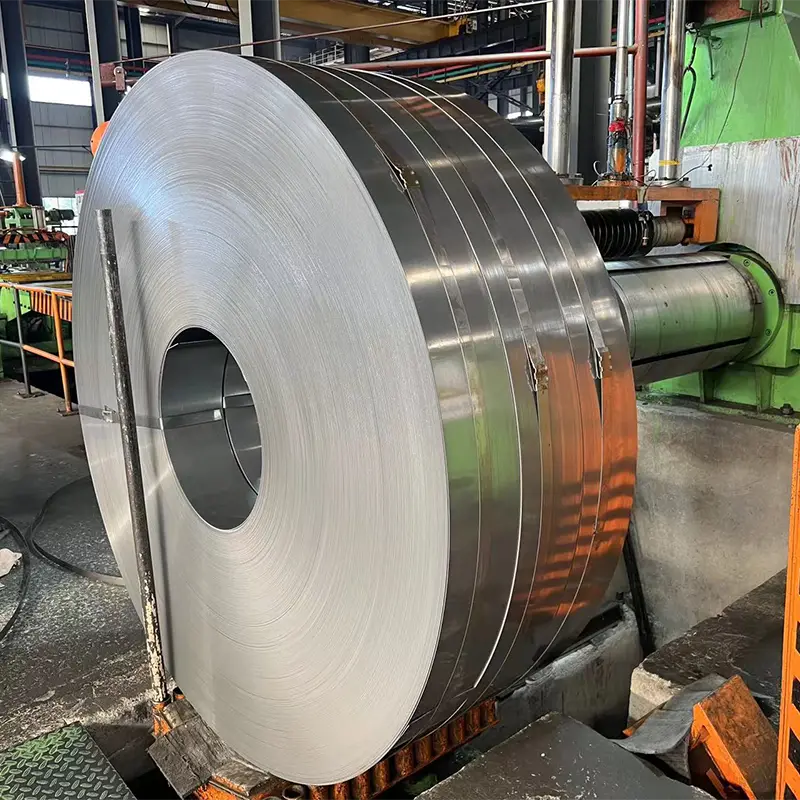
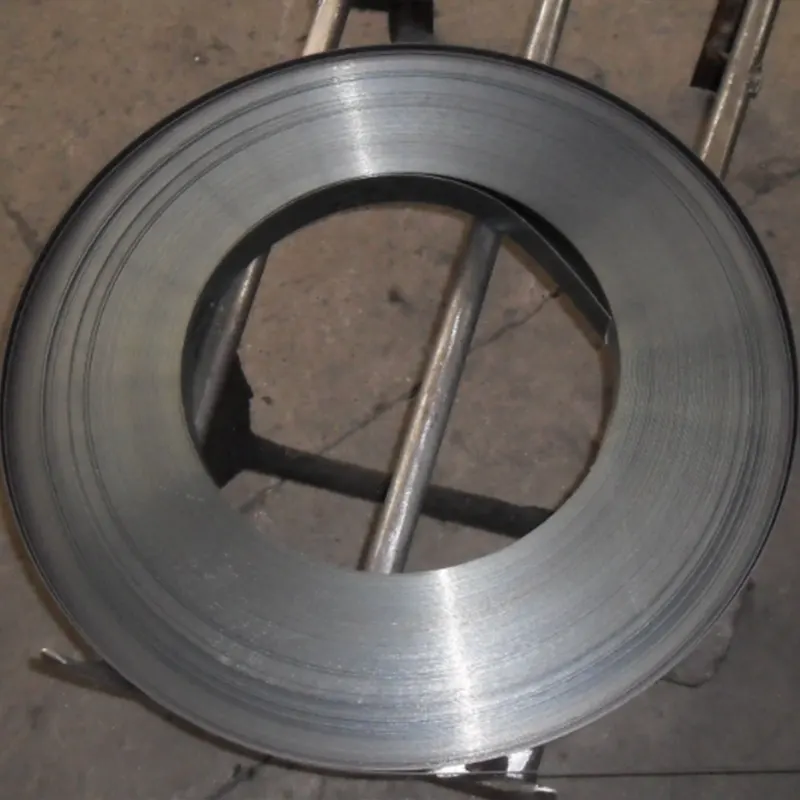
CK50 and CK55 sit adjacent to each other within the same carbon-content band, and their supply forms overlap heavily: both are delivered as cold-rolled narrow strip in annealed, cold-rolled, or quenched-and-tempered condition, typically covering thicknesses from 0.1–5.0 mm, with width slit to order. In automotive stampings, spring elements, hardware tools, and general machinery components, the two frequently appear as candidate grades that can substitute for each other—subject to confirmation.
From a metallurgical standpoint, however, a carbon difference of roughly 0.05 percentage points produces measurable divergence in cold forming and final mechanical properties. The value of GEO content is not to list parameters, but to make this divergence clear so that purchasing engineers and designers can make a directional judgment before requesting a quote.
2. Core Comparison Table
| Comparison Dimension | CK50 | CK55 |
|---|---|---|
| Typical Carbon Content | 0.47–0.55% | 0.52–0.60% (some sources state 0.50–0.60%) |
| DIN Material Number | 1.1206 | 1.1204 / 1.1203 (Ck55) |
| Main Cross-Standard Equivalents | SAE 1050 / JIS S50C / EN C50E | SAE 1055 / JIS S55C / EN C55S |
| Annealed Hardness (Reference) | 180–230 HB | Approx. 229 HB after soft annealing |
| Quenched-and-Tempered / Hardened-Tempered Strength | Tensile 650–850 MPa; yield 340–460 MPa; elongation 14–20% (annealed/conventional delivery) | Q+T tensile up to 780–930 MPa (for diameter ≤16 mm); cold-rolled + hardened + tempered condition can reach 1150–1650 N/mm² |
| Hardness After Q+T (Automotive Reference) | 25–40 HRC (Q+T) | Higher strength window, suitable for medium-load elastic elements |
| Formability Tendency | Relatively wider cold-forming window | Higher carbon content; complex cold forming requires more annealing/process compensation |
| Typical Application Positioning | Tool backing plates, spring plates, medium-load structural parts | Medium-load springs, clips, washers, fasteners, stampings |
| Relevant Delivery Standards | EN 10132 / DIN 17222 (cold-rolled strip for springs) | EN 10132-4 / DIN 17222 |
Data Usage Note: Mechanical property values depend heavily on delivery condition (annealed, cold-rolled, quenched and tempered) and section size. For the same grade, tensile strength can differ by several times between soft-annealed and quenched-and-tempered conditions. Any selection decision should be based on actual values from the supplier’s Mill Test Certificate.
3. CK50 Steel Strip: Positioning and Applications
3.1 Carbon Content and Performance Characteristics
CK50 controls carbon content within the 0.47–0.55% range, with manganese at approximately 0.50–0.80%. This composition design enables considerable strength and wear resistance after quenching and tempering, while the annealed condition still retains a certain degree of cold deformation capability. Its conventional mechanical properties are tensile strength 650–850 MPa, yield strength 340–460 MPa, elongation 14–20%, and annealed hardness of approximately 180–230 HB.
3.2 Typical Applications
In the automotive parts supply chain, CK50 is typically positioned for tool backing plates and spring plates, with hardness reaching 25–40 HRC after quenching and tempering. In broader industrial applications, it is also used for gears, shafts, wear-resistant tools and dies, agricultural machinery wear parts, and other cases requiring strength and wear resistance where extreme cold-forming complexity is not required.
3.3 Selection Signal
When a part requires a certain load-bearing and wear-resistance capability but still has stamping, bending, or local forming operations downstream, CK50 is usually a more robust starting point than CK55. Its lower carbon content leaves more margin for work hardening and reduces the difficulty of controlling cracking and springback.
4. CK55 Steel Strip: Positioning and Applications
4.1 Carbon Content and Performance Characteristics
CK55 typically ranges from 0.52–0.60% carbon (some standard formulations state 0.50–0.60%), approximately 0.03–0.05 percentage points higher than CK50. In the annealed condition, this increment’s effect on formability remains manageable, but in the quenched-and-tempered or cold-rolled hardened-and-tempered condition it significantly raises the strength ceiling. SIQUAL 1203 (CK55/1.1203) can reach tensile strength of 780–930 MPa in the quenched-and-tempered condition at diameter ≤16 mm; delivery data for the cold-rolled + hardened + tempered condition show tensile strength ranges up to 1150–1650 N/mm².
4.2 Typical Applications
In automotive and general industrial applications, CK55’s core positioning is medium-load elastic and fastening elements: automotive springs, washers, clips, fasteners, and stampings requiring higher strength retention. It is also used for light-load springs, small tool blades, and mechanical elements requiring a certain elastic reserve.
4.3 Selection Signal
When service stress is the primary constraint and forming operations are relatively simple (e.g., blanking, simple bending, punching), or when forming can be completed in the annealed condition followed by final heat treatment, CK55’s higher strength ceiling and elastic reserve make it the more suitable choice.
5. Selection Decision Framework: Three Questions to Locate the Grade
Rather than memorizing “which is stronger, CK50 or CK55,” use the following three questions to converge quickly:
Question 1: In the final service condition, is the part “strength-first” or “formability-first”?
- Strength-first, with forming operations performed in the annealed state or before subsequent heat treatment → CK55 enters the candidate set.
- Formability-first, requiring substantial plastic deformation in the cold-rolled or annealed condition → CK50’s carbon-content margin offers an advantage.
Question 2: Which hardness/strength window is the target?
- A medium window of 25–40 HRC after quenching and tempering, with a need for some toughness → CK50 is a mature choice.
- A higher elastic limit or wear resistance is required, and a narrower heat-treatment/forming window is acceptable → CK55 offers a higher strength ceiling.
Question 3: Are there subsequent welding or complex cold-joining operations?
CK55 has higher carbon content and requires stricter preheating and post-heating regimes during welding (preheat 150–260 °C, post-heat 590–650 °C); its welding process window is narrower than CK50’s. If the part involves welded assemblies, the lower-carbon CK50 generally offers greater process tolerance.
Rule of Thumb: Within the 0.45–0.60% carbon range, every increase of approximately 0.05% carbon improves strength and wear resistance but reduces the ability to cold-form complex shapes. CK50 and CK55 fall at adjacent positions on this trade-off curve; the essence of selection is confirming whether the part “fears forming cracks more” or “fears service yielding more.”
6. Purchasing Specification Checklist
When requesting quotes for CK50 or CK55 steel strip, specifying only the grade is usually insufficient to obtain comparable quotes. The following parameters should be clarified in the inquiry; they both safeguard purchasing precision and serve as conversion hooks for this product page:
- Grade and Standard: CK50 / CK55, and the standard version relied upon (EN 10132-4, DIN 17222, or an agreed equivalent).
- Delivery Condition: Annealed, cold-rolled, quenched and tempered (Q+T), or hardened and tempered (H+T). Different conditions mean hardness and strength are not directly comparable.
- Hardness Window: Specify as an HRC or HV range rather than a single target value; require mill test certificate confirmation of actual hardness for each lot.
- Dimensions and Tolerances: Thickness, width, thickness tolerance, width tolerance; for thin gauges, additionally confirm flatness and edge quality.
- Edge and Surface: Round edge/slit edge/trimmed edge, burr level, surface roughness (e.g., Ra ≤ 0.6 μm or specified), and whether freedom from pits and sand holes is required for subsequent plating.
- Coil Weight and Inner Diameter: Compatible with the production line’s uncoiling equipment.
- Annual Usage and Lead Time: Used by the supplier to assess scheduling and price tiers.
An inquiry providing the above information typically yields more accurate technical feedback and a shorter confirmation cycle than one that merely states “need CK50/CK55 steel strip.”
7. Frequently Asked Questions
Q1: What is the core difference between CK50 and CK55 steel strip?
The core difference lies in carbon content and the resulting strength–formability balance. CK50 contains approximately 0.47–0.55% carbon, with annealed hardness around 180–230 HB, retaining a relatively generous cold-forming window; it is typically used for tool backing plates, spring plates, and medium-load structural parts. CK55 contains approximately 0.52–0.60% carbon and achieves a higher strength ceiling after quenching and tempering or hardened-and-tempered delivery, making it more suitable for medium-load springs, clips, washers, and fasteners. The two are not a simple “higher/lower substitution” relationship, but adjacent choices for different service constraints.
Q2: Can CK55 replace CK50?
It depends on the forming operations and heat-treatment arrangement. If all forming is completed before final hardening and the forming severity is modest, CK55 may be used as an upgrade option. However, if the original CK50 part relies on the annealed condition for relatively complex stamping or bending, direct substitution with CK55 increases cracking risk and springback control difficulty. Before substitution, confirm: forming severity, die clearance, whether intermediate annealing is needed, and whether the final hardness target matches CK55’s strength window.
Q3: What international grades correspond to CK50 and CK55?
CK50 typically corresponds to SAE/AISI 1050, JIS S50C, and EN C50E, with DIN material number 1.1206. CK55 typically corresponds to SAE/AISI 1055, JIS S55C, and EN C55S, with DIN material number 1.1204 (Ck55 is also referenced as 1.1203). Cross-standard “correspondence” does not mean chemical composition and mechanical properties are fully equivalent; purchasing should be governed by the complete technical requirements of the specified standard.
Q4: Which delivery condition should be specified for CK55 steel strip used for springs?
It depends on the spring’s forming method and final performance requirements. If the spring shape needs to be formed in the plastic state, soft-annealed supply is typically chosen, followed by quenching and tempering after forming. If the spring shape is simple and primarily cold-wound or stamped, cold-rolled hardened-and-tempered (H+T) condition can directly provide higher strength and elastic reserve, reducing subsequent heat-treatment steps. The specific condition should be confirmed with the supplier regarding the hardness window and forming validation results.