Introduction: Why Heat Treatment Is Used
In the manufacturing of industrial steel strip, the difference between a component that fails prematurely and one that performs reliably for years often comes down to one critical step: heat treatment.
While the chemical composition of steel determines its potential, heat treatment unlocks that potential. It is the controlled process of heating and cooling that alters the physical and mechanical properties of the steel without changing its shape. For buyers sourcing steel strip for demanding applications—such as saw blades, cutting tools, or precision springs—understanding steel strip heat treatment is essential. It is not just a production step; it is the defining factor that dictates steel strip hardness, strength, and ultimately, the performance of your final product.
Overview of Steel Strip Heat Treatment
Heat treatment is a broad term covering several distinct processes. In the context of cold-rolled steel strip, the most common processes aim to achieve one of two goals: softening the material for further processing (annealing) or hardening it for final use (hardening and tempering).
At a basic level, the process involves three stages:
- Heating: The steel is heated to a specific temperature to alter its microstructure.
- Soaking: The steel is held at that temperature to ensure uniform transformation.
- Cooling: The steel is cooled at a controlled rate (using air, oil, or water) to lock in the desired properties.
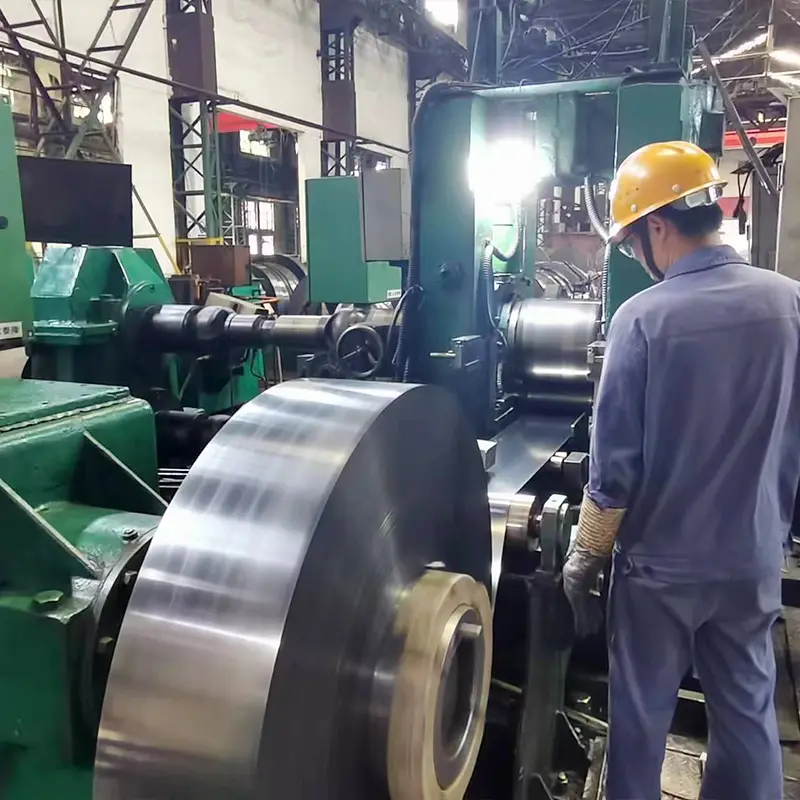
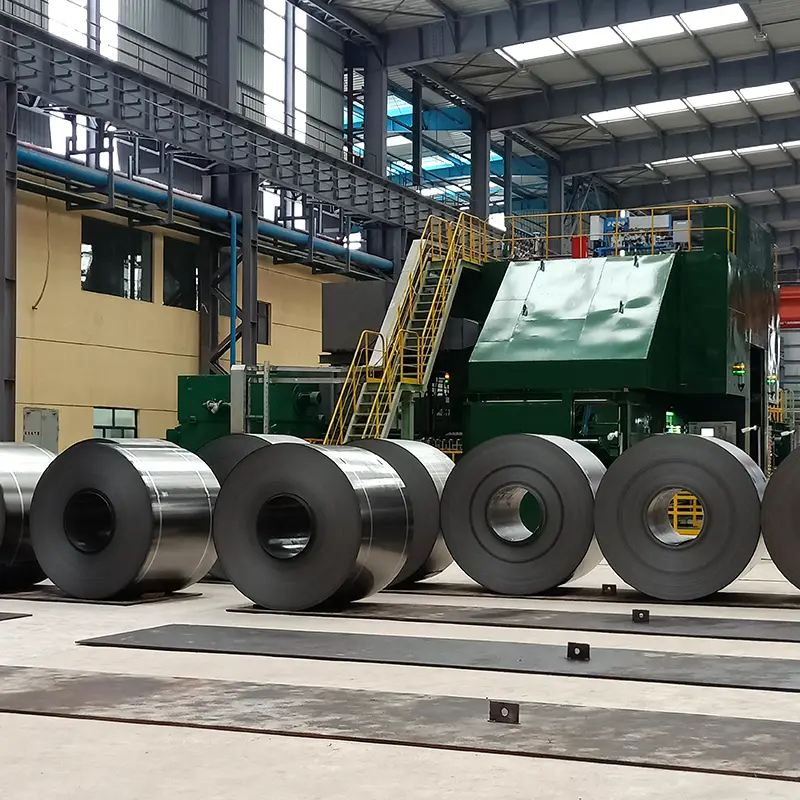
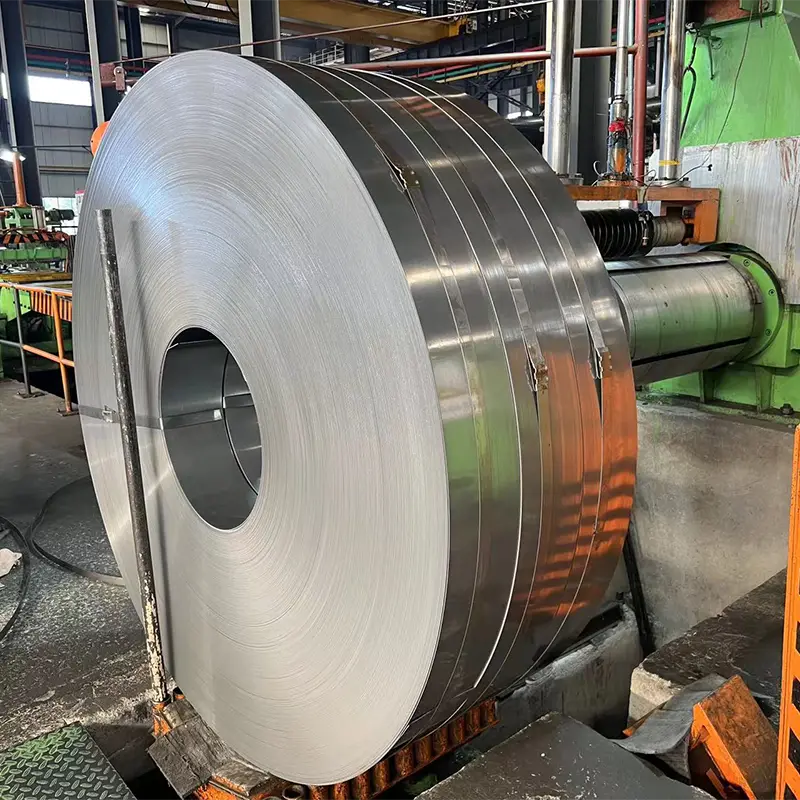
For steel strip, continuous furnaces are typically used to ensure consistent properties along the entire length of the coil. While the exact parameters—such as temperature, line speed, and atmosphere—vary depending on the steel grade and the desired outcome, the overarching goal remains the same: to achieve a uniform microstructure that meets the customer’s technical requirements.
Hardness and Mechanical Performance
When buyers specify a heat-treated steel strip, they are usually defining a set of mechanical properties. The most prominent is steel strip hardness.
Hardness is a measure of a material’s resistance to localized plastic deformation (scratching, indenting, or cutting). It is typically measured using Rockwell (HRC, HRB) or Vickers (HV) scales.
However, hardness does not exist in isolation. It is directly linked to strength and ductility:
- Higher Hardness: Usually correlates with higher tensile strength and yield strength, meaning the steel can withstand higher loads without deforming. However, this often comes at the cost of reduced ductility, making the steel more brittle.
- Lower Hardness: Offers greater ductility and formability, making the steel easier to bend, punch, or shape, but it lacks the wear resistance for demanding cutting applications.
The goal of steel strip heat treatment is to find the “sweet spot” where the material is hard enough to resist wear and deformation, yet tough enough to resist cracking under impact or bending. This balance is achieved through processes like hardening (to maximize hardness) followed by tempering (to restore some toughness).
Heat-Treated Steel Strip for Saw Blade Applications
One of the most demanding applications for heat-treated steel strip is the manufacturing of saw blades—both for woodworking and metal cutting.
In this application, the steel strip must possess a unique combination of properties:
- High Hardness: The tooth tips must be hard enough to cut through wood or metal without dulling quickly.
- High Fatigue Resistance: The blade body must withstand the high-speed rotation and repeated flexing without breaking.
- Excellent Flatness: Any deviation in flatness or internal stress can lead to a wobbly cut or blade failure.
For saw blades, the heat treatment process is critical. It ensures that the steel strip has a uniform hardness profile across its width and length. If the hardness varies too much from the center to the edge of the strip, the blade will not hold a straight line. Therefore, suppliers of heat-treated steel strip for this market must focus heavily on process control and consistency.
Why Material Grade and Processing Conditions Matter
You cannot achieve the desired steel strip hardness from just any steel. The starting material—the steel grade—determines the ceiling of what is possible.
- Carbon Content: This is the primary driver of hardness. Low-carbon steels (e.g., 1008, 1010) cannot be hardened to the same level as high-carbon steels (e.g., 1075, 1095). For cutting applications, high-carbon grades are essential.
- Alloying Elements: Grades like 4130, 4140, or spring steels (e.g., 5160) contain elements like chromium and molybdenum that increase “hardenability” (the depth to which the steel can be hardened) and improve toughness.
- Processing Conditions: Even with the right grade, the heat treatment parameters—temperature, time, and cooling rate—must be precise. A slight variation in the furnace atmosphere can cause decarburization (loss of carbon at the surface), which significantly reduces surface hardness and fatigue life.
When sourcing, it is important to discuss your intended application with your supplier. A reputable supplier will not just sell you a grade; they will recommend the appropriate heat treatment condition to match your manufacturing process (e.g., whether you will be doing your own stamping, grinding, or hardening after delivery).
What Buyers Should Specify
To ensure you receive the correct material for your production line, your purchase order or inquiry should be as specific as possible. Based on industry best practices, here are the key parameters to specify:
- Steel Grade: Clearly state the standard (e.g., AISI 1075, C67S, 51CrV4) and any specific chemical composition requirements.
- Required Hardness: Specify the target hardness range (e.g., 42-48 HRC) and the test method (e.g., Rockwell C). Remember that hardness is usually a range, not a single number, to allow for manufacturing tolerances.
- Dimensions: Provide the exact thickness, width, and tolerances. This includes edge condition (e.g., slit, mill edge, deburred).
- Delivery Condition: This is critical. Do you need the strip in a soft annealed condition (for forming), or a hardened and tempered condition (for direct use)? Specify the surface finish (e.g., bright, blue, polished).
- Intended Application: Telling your supplier “this is for a high-speed saw blade” or “this is for a spring clip” allows them to recommend the correct microstructure and tempering temperature to prevent premature failure.
Frequently Asked Questions
Q: What is the difference between “hardened” and “tempered” steel strip?
A: “Hardened” steel is heated and quenched rapidly to achieve maximum hardness, but it is often too brittle for use. “Tempered” steel is hardened steel that has been reheated to a lower temperature to reduce brittleness and improve toughness, trading a slight loss in hardness for a significant gain in durability.
Q: Can you supply steel strip with a specific hardness along the edge vs. the center?
A: This is a specialized requirement known as “edge-to-center” hardness variation. While standard continuous heat treatment aims for uniformity, some advanced processes can create a gradient. This must be discussed with the supplier based on their specific equipment capabilities.
Q: How does heat treatment affect the flatness of the strip?
A: Heat treatment can introduce internal stresses that cause the strip to warp or twist. High-quality suppliers use tension leveling or specialized cooling techniques to maintain excellent flatness, which is critical for automated stamping and cutting lines.
Q: What is the standard hardness for saw blade steel strip?
A: It varies widely based on the blade type. For many woodworking saw blades, a hardness range of 40-48 HRC is common. However, this depends on the specific grade and the cutting application. Always consult with your technical team or your supplier for the optimal specification.