Introduction: What Is Carbon Steel Strip?
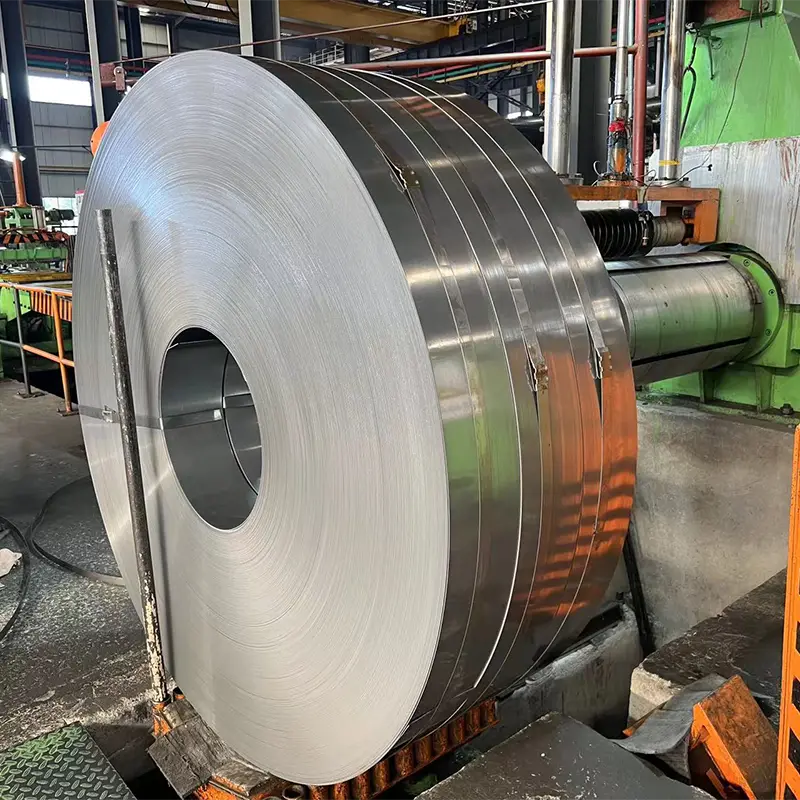
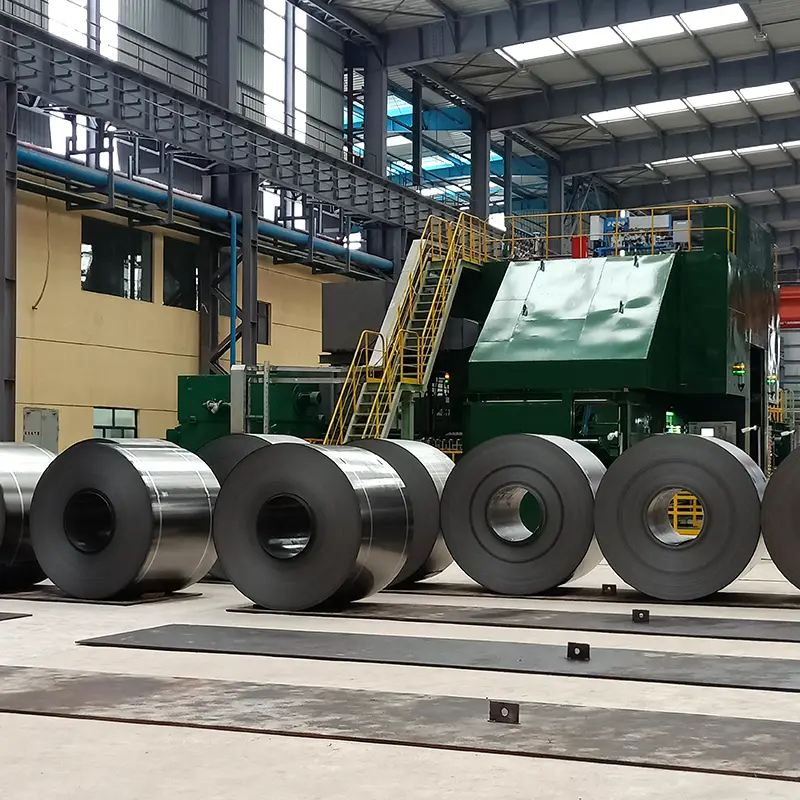
Steel strip is a flat-rolled, thin product supplied in coils or cut lengths, typically produced through hot rolling followed by cold rolling and annealing to achieve precise dimensions and surface finish. Carbon steel strip is the most fundamental category: its chemical composition is built around iron with carbon as the primary alloying element, generally below 2%, and only residual or incidental amounts of other elements.
In practice, carbon steel strip is classified by carbon content into three bands — low carbon (below 0.25%), medium carbon (0.25%–0.60%), and high carbon (above 0.60%)-. This seemingly simple distinction drives a wide range of mechanical behavior: low-carbon grades offer excellent formability and weldability for deep-drawn parts, while high-carbon grades deliver the hardness and wear resistance needed for springs, blades, and cutting tools.
Cold-reduced carbon steel strip with carbon content above 0.25% is governed by standards such as ISO 4960, which specifies tight dimensional tolerances and controlled surface finishes for highly stressed components. In contrast, cold-reduced strip with a maximum carbon content of 0.25% is covered by ISO 6932, reflecting the different quality and tolerance requirements for lower-carbon applications.
The practical significance is straightforward: carbon steel strip offers a predictable, cost-effective material platform where the carbon content alone can be tuned to balance strength, hardness, and ductility. It is the default choice when the service environment is moderate and the required properties can be achieved through carbon content adjustment and conventional heat treatment.
What Is Alloy Steel Strip?
Alloy steel strip starts from the same iron–carbon base but deliberately incorporates additional alloying elements — chromium, nickel, manganese, molybdenum, vanadium, and others — in concentrations sufficient to alter the material’s metallurgical behavior in specific, targeted ways. These additions are not incidental; they are selected to improve hardenability, wear resistance, toughness, and high-temperature performance beyond what plain carbon steel can achieve.
Alloy steel strip is typically furnished to chemical composition requirements rather than minimum mechanical property thresholds, and it is intended for applications where bending and moderate forming are required but where the final properties will be developed through heat treatment. Common alloying elements include:
- Chromium — improves strength, hardness, and hardenability
- Nickel — strengthens ferrite and improves toughness
- Manganese — increases hardenability and retards softening during tempering
- Molybdenum and vanadium — retard tempering and provide secondary hardening
- Silicon — retards martensite formation and can improve yield strength
The practical consequence is that alloy steel strip can be quenched and tempered to a broader range of strength levels than plain carbon steel of comparable carbon content. As-quenched alloy steels are not inherently harder than carbon steels at the same carbon level; they are harder because the alloying elements suppress the formation of softer pearlite and bainite during cooling, allowing more martensite to form at lower cooling rates-. This means thicker sections can be through-hardened, and the risk of distortion or cracking during quenching is reduced.
Alloy steel strip finds use wherever carbon steel’s hardenability ceiling becomes a limiting factor: high-fatigue springs, transmission components, cutting tools, and parts that must maintain strength at elevated temperatures-.
Key Differences Between Carbon and Alloy Steel Strip
Chemical Composition
The most fundamental difference lies in the alloying philosophy. Carbon steel strip relies on carbon as the primary strengthening element, with manganese typically present at levels up to about 0.90% for deoxidation and basic strength control-. Other elements remain at residual levels. Alloy steel strip deliberately adds one or more elements — chromium, nickel, molybdenum, vanadium, or combinations thereof — at concentrations that meaningfully change the steel’s transformation behavior.
For example, a typical 51CrV4 alloy spring steel contains approximately 0.53% কার্বন, 1.03% chromium, and 0.18% vanadium-. By contrast, a CK45 carbon steel strip contains roughly 0.47% carbon with only trace chromium (0.094%) and nickel (0.044%)-. The carbon levels are similar; the alloying strategy is entirely different.
Heat Treatment Response
This is where the practical divergence becomes most pronounced. Carbon steel achieves maximum hardness at the surface during quenching but loses that hardness rapidly with depth-. Thick sections cannot be uniformly hardened because the cooling rate at the core is insufficient to form martensite throughout. Alloy steel strip, by contrast, exhibits significantly higher hardenability: the alloying elements shift the continuous cooling transformation curves to the right, allowing martensite formation at slower cooling rates and therefore through greater section thicknesses.
The practical implications for strip processors are substantial:
- Carbon steel strip is typically used in the as-rolled, annealed, or normalized condition, or is surface-hardened where wear resistance is needed without through-hardening. Quench and temper treatments are effective but limited to thin sections.
- Alloy steel strip is designed for quench-and-temper processing. The alloying elements also retard softening during tempering, meaning alloy grades can be tempered at higher temperatures for better toughness while retaining strength — a combination that plain carbon steel cannot match-.
Mechanical Property Considerations
Alloy steel strip generally offers higher strength, hardness, toughness, and wear resistance than carbon steel strip of comparable carbon content, but the specific property balance depends heavily on the alloying system and heat treatment-. Tensile strength values for heat-treated alloy steel strip can reach 950–1550 MPa with yield strengths of 550–1400 MPa-. Carbon steel strip, depending on grade and condition, typically ranges from about 340 MPa to over 700 MPa tensile strength-.
Alloy steel also resists corrosion and high-temperature degradation better than plain carbon steel, due to elements such as chromium and molybdenum-. However, this advantage comes at a cost: alloy steel strip carries a higher price per tonne, and the additional heat treatment steps further increase total component cost. The selection decision therefore hinges on whether the application genuinely requires the performance envelope that only alloy steel can deliver.
Typical Applications
Carbon steel strip applications are concentrated in cost-sensitive, high-volume sectors where formability, surface finish, and predictable mechanical properties matter more than extreme performance:
- Light industrial hardware and home appliances — electronic rice cookers, ovens, LED light frames, kitchen utensils, and stationery
- Construction tools — trowels, putty knives, scrapers, and spatulas-
- Automotive components — shims, washers, and general structural parts-
- Roller shutter springs, metal clips, and shoe accessories — where moderate spring properties suffice
- General structural and welded tube applications — furniture, lighting fixtures, and motorcycle accessories
Alloy steel strip applications target demanding environments where fatigue resistance, through-hardening, or elevated-temperature stability is non-negotiable:
- Springs — clutch springs, transmission plates, laminated springs, and thrust washers requiring high fatigue strength
- Cutting tools — band saw blades, hacksaw blades, leather knives, and die stock blades
- Automotive powertrain — gears, suspension components, and brake parts
- Industrial equipment — conveyor components, couplings, and heavy-duty machinery parts
- Aerospace and defense — structural components and high-performance fasteners
Common Carbon Steel Grades
The CK series represents the standard European medium-to-high carbon strip grades, widely specified for springs, tools, and wear-resistant components.
CK45 (1.1191 / AISI 1045) contains approximately 0.42–0.50% carbon with manganese as the primary additional element-. It is a medium-carbon grade offering a good balance of strength and toughness, with tensile strength in the range of 590–720 MPa and yield strength above 325 MPa in the quenched and tempered condition-. CK45 is readily machinable but has limited weldability, making it suitable for shafts, gears, and components where moderate wear resistance is required-.
CK55 (1.1203 / AISI 1055) steps up the carbon content to approximately 0.52–0.58%, increasing hardness and wear resistance at the expense of some ductility. It is commonly used for springs, hand tools, and agricultural blades where a combination of resilience and edge retention is needed.
CK75 (1.1248 / AISI 1075) contains about 0.70–0.80% carbon, placing it firmly in the high-carbon range-. This grade delivers high hardness and excellent wear resistance after hardening and tempering, with typical hardness in the 29–55 HRC range depending on heat treatment-. CK75 is widely used for saw blades, spring washers, and cutting tools.
CK80 (1.1269 / AISI 1080) is a slightly higher-carbon variant (approximately 0.75–0.85%) offering even greater hardness potential. It is specified for heavy-duty springs, scraper blades, and components requiring maximum wear resistance within the carbon steel family. Like CK75, it responds well to quench-and-temper processing but must be carefully controlled to avoid cracking in thicker sections.
Common Alloy Steel Grades
The alloy grades below represent the workhorses of precision strip applications, each engineered around a specific combination of hardenability, toughness, and wear resistance.
C75Cr1 (1.2002) is a chromium-alloyed high-carbon strip steel with approximately 0.70–0.80% carbon and 0.40–0.60% chromium. The chromium addition improves hardenability and wear resistance beyond what plain CK75 can achieve, while maintaining the high hardness required for cutting edges. C75Cr1 is a preferred grade for woodworking saw blades, band saws, and industrial knives where edge retention under abrasive conditions is critical-.
75Ni8 (1.5634) incorporates nickel at approximately 1.5–2.0% alongside 0.70–0.80% carbon. Nickel strengthens the ferrite matrix and substantially improves toughness, making 75Ni8 particularly suited to applications involving impact or shock loading — think agricultural blades, heavy-duty springs, and components that must resist brittle fracture. It also exhibits good hardenability, allowing effective through-hardening in strip thicknesses that would challenge plain carbon grades.
51CrV4 (1.8159 / SAE 6150) is a chromium-vanadium spring steel with approximately 0.47–0.55% carbon, 0.90–1.20% chromium, and 0.10–0.20% vanadium-. The vanadium addition provides secondary hardening through the formation of stable vanadium carbides, and the chromium content ensures deep hardenability. This grade achieves an excellent combination of high strength (up to 2050 MPa tensile strength in optimized conditions) and impact toughness, making it the standard choice for valve springs, clutch springs, and high-fatigue suspension components-. It is also widely used for die steels and high-speed steel applications-.
6150 (AISI 6150 / SUP10) is the American designation for a chrome-vanadium spring steel essentially equivalent to 51CrV4, though minor compositional differences may exist between ASTM and EN specifications. It is specified in applications where consistent fatigue performance and through-hardening are required, particularly in automotive and industrial spring manufacturing. The grade’s balanced chemistry — moderate carbon, sufficient chromium for hardenability, and vanadium for grain refinement — makes it forgiving in heat treatment and reliable in service.
How to Select a Grade for Your Application
Selecting between carbon and alloy steel strip is not a matter of choosing the “better” material. It is a matter of matching the material’s capability envelope to the application’s actual demands. The following framework can guide that decision:
Step 1: Define the mechanical requirement. If the component operates under static or low-cycle loading and the required hardness can be achieved in thin sections, carbon steel strip is likely sufficient and more economical. If the component experiences cyclic loading, requires through-hardening of thicker sections, or must maintain properties at elevated temperatures, alloy steel strip becomes necessary.
Step 2: Assess the heat treatment path. Carbon steel strip is typically supplied in the annealed or as-rolled condition and may be used without further heat treatment, or with simple surface hardening. Alloy steel strip is designed to be quenched and tempered; the grade selection should therefore consider the achievable hardness and toughness combination after the intended heat treatment cycle. If your process cannot accommodate quench-and-temper — for example, if distortion is a concern or if you lack the necessary equipment — a high-carbon carbon steel strip with a different processing route may be more practical.
Step 3: Evaluate the service environment. Corrosion, abrasion, and temperature all shift the calculation. Alloy steel strip with chromium and molybdenum additions offers better resistance to oxidation and corrosion than plain carbon steel, and its tempering resistance means it retains hardness at higher operating temperatures-. For room-temperature applications in dry environments, carbon steel strip is usually adequate.
Step 4: Consider strip dimensions and tolerances. Both carbon and alloy steel strip are available in thicknesses from approximately 0.1 mm to 5.0 mm and widths up to 1250 mm, but alloy grades are often produced in narrower width ranges and may have different edge quality options. If your application requires very thin strip with tight tolerances, verify that the candidate grade is routinely produced to your specifications.
Step 5: Calculate lifecycle cost, not just material cost. Alloy steel strip carries a higher purchase price, but this premium may be offset by longer service life, reduced maintenance, or the ability to use a thinner section. Conversely, specifying an alloy grade where a carbon grade would perform adequately adds cost without corresponding benefit. The most reliable approach is to test candidate grades in the actual application before committing to a specification.
Questions to Discuss with Your Supplier
Material selection does not end with the grade designation. The following questions will help you and your supplier converge on a specification that works in practice:
Chemical composition and standard compliance. Which standard does the material conform to — EN, ASTM, JIS, or a proprietary specification? Can the supplier provide a mill test certificate with heat chemistry and mechanical property data for each lot? Reputable suppliers should be able to furnish ISO 9001 certification and third-party inspection reports on request-.
Heat treatment condition and hardenability. Is the strip supplied in the annealed, normalized, or quenched-and-tempered condition? For alloy grades, what is the guaranteed hardenability (Jominy curve or equivalent)? What hardness range can be achieved after the supplier’s recommended heat treatment?
Dimensional and surface specifications. What thickness and width tolerances are guaranteed? What edge condition is supplied — mill edge, slit edge, or rounded edge? Is the surface finish suitable for the intended forming or coating process?
Formability and processing compatibility. Can the strip be blanked, bent, or deep-drawn without cracking? Are there any restrictions on welding for the selected grade? What lubrication or surface treatment is recommended for stamping or forming operations?
Consistency and traceability. Does the supplier maintain batch traceability from raw material to finished strip? What is the typical lead time for repeat orders, and how does the supplier handle non-conformance claims? For long-term supply relationships, these operational factors often matter more than the initial price per tonne.
Not sure which steel grade fits your application? Share your requirements with our team — we will help you match the right strip specification to your performance, processing, and budget targets.